Gunner Stone
Applied Scientist · Machine Learning Engineer

Applied Scientist & ML Engineer
I work on vision model architecture for edge devices. Most of my time goes into designing models that can train on large GPU clusters and still run well on NPUs from different hardware vendors.
Before industry I did research in LiDAR-based forest ecology, mapping biomass, carbon stocks, and biodiversity to study how wildfires reshape forest ecosystems. I have a PhD from the University of Nevada, Reno, and have published at IEEE ICIP, ACM PEARC, ISVC, Machine Vision & Applications, and AGU.
PhD · MS · BS in Computer Science & Engineering, University of Nevada, Reno
13
Publications
88+
Citations
6
Venues
Efficient Vision at the Edge
Large vision models trained on GPU clusters, compressed to run at real-time latency on edge NPUs.
Model Compression
Quantization-aware training, post-training quantization, and low-rank adaptation. The goal is smaller models that still hit accuracy targets in production.
Efficient Architectures
Windowed attention, distillation, and architecture search tuned to the memory and latency budgets of actual edge hardware.
World Models
Joint-embedding predictive architectures (JEPA) that learn to predict and reason about visual scenes, not just classify them.
Recent Publications
Selected peer-reviewed work in 3D point cloud understanding, deep learning, and forest ecology.
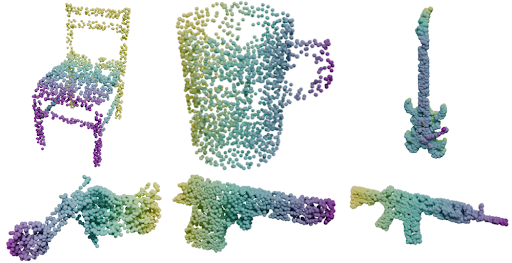
Point-RTD: Replaced Token Denoising for Pretraining Transformer Models on Point Clouds
A new method for teaching AI to better understand 3D data through replaced token denoising, leading to stronger performance in object recognition and scene understanding.
Read Paper →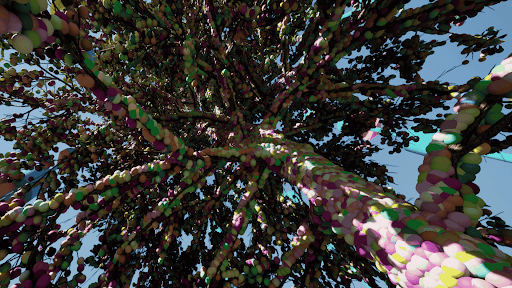
LiDAR Toolkit: Scalable LiDAR Simulation in Unreal Engine 5
A free, open-source UE5 plugin for generating realistic point cloud LiDAR scans, bridging the gap between synthetic and real-world data.
Read Paper →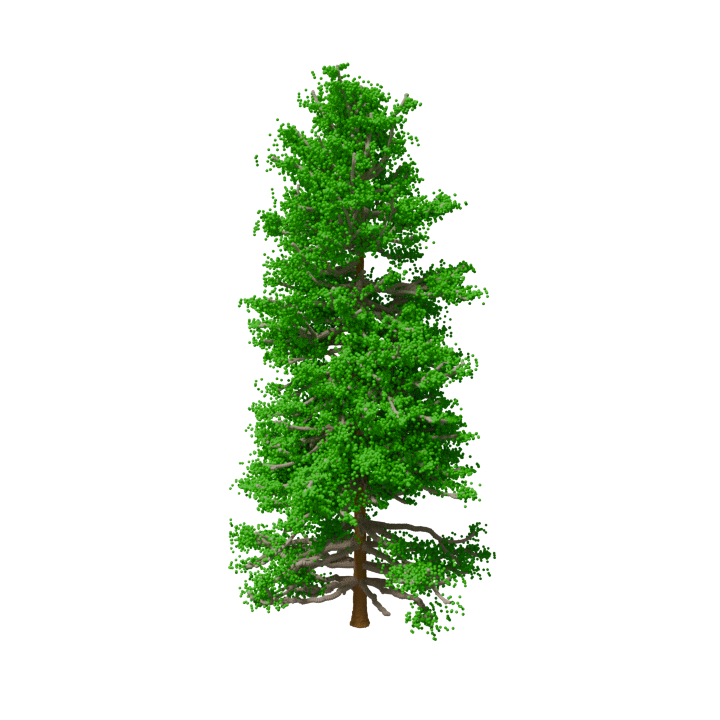
Generating Synthetic Tree Point Clouds for Deep Learning
Evaluating synthetic tree point cloud creation for part-segmentation tasks, comparing five well-known models on trunk, branch, and leaf classification.
Read Paper →